


How active listening improves service outcomes and reduces conflict
The story started with what seemed like another difficult customer. A parent arrived at a childcare centre visibly frustrated. Their tone was sharp, their arms were folded, and they immediately began listing everything that had gone wrong during the week. At the library, it could just as easily have been a patron upset about a booking issue, an overdue fine, or a computer reservation.
In both situations, the staff member had two choices. They could jump straight into explaining policies and defending the organisation, or they could do something much more powerful. They could simply listen.
More often than not, people who appear angry are actually looking to be heard. Active listening is one of the most valuable customer service skills any childcare educator or library professional can develop. It helps reduce conflict, build trust, and create positive outcomes for everyone involved.

Why We Rush to Solve Problems
When someone complains, our natural instinct is to fix the issue as quickly as possible. We start offering solutions, explaining procedures, or correcting misunderstandings before the customer has finished speaking.
While well intentioned, this approach can sometimes make the customer feel ignored. They may think their concerns have not been fully understood,
which often increases frustration rather than reducing it. In many situations,
people need to feel heard before they are ready to hear your solution.
What Is Active Listening?
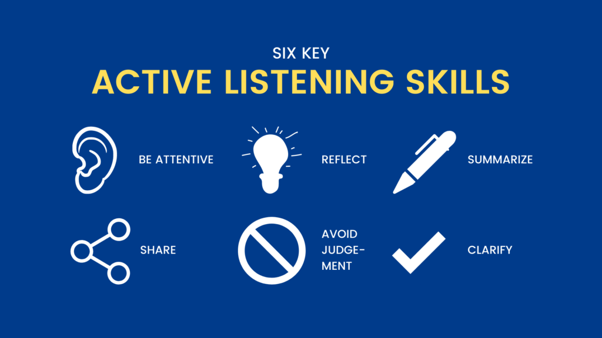
Active listening is more than simply hearing the words someone is saying. It means giving your full attention, understanding the message behind the words, and responding in a way that shows genuine empathy and understanding.
Active listening includes:
• Maintaining appropriate eye contact.
• Avoiding interruptions.
• Asking thoughtful questions.
• Acknowledging emotions.
• Paraphrasing to confirm understanding.
• Responding with empathy before offering solutions.
These simple behaviours help customers feel respected and valued, even when the outcome may not be exactly what they were hoping for.
The Difference It Makes
Imagine a parent says:
“I’m really disappointed about what happened this morning.”
An immediate response might be:
“Let me explain why that happened.”
A better response could be:
“I’m sorry to hear you’re feeling disappointed. Can you tell me more about what happened?”
That one question changes the entire conversation. Instead of feeling dismissed, the parent feels invited to share their experience. Often, once someone has fully explained their concerns, they become far more open to discussing possible solutions. The same approach works in libraries when patrons are frustrated about policies, technology issues, or unavailable resources.
Listening Reduces Conflict
Many customer service conflicts escalate because people feel they are being argued with instead of understood. Active listening helps lower emotions because it communicates respect.
Simple phrases such as:
• “I can understand why that would be frustrating.”
• “Thank you for explaining that.”
• “Let me make sure I’ve understood correctly.”
can significantly change the tone of a conversation. When customers feel acknowledged, they are often more willing to work together towards a solution.

Listening Builds Trust
Families choose childcare centres because they trust educators to care for what matters most to them. Library patrons rely on staff to provide guidance, support, and access to important services.
Trust grows when people believe they are being listened to. Even if staff cannot immediately resolve every issue, customers are much more likely to leave with a positive impression if they feel respected throughout the interaction.
Active Listening Improves Team Confidence
Active listening does not just benefit customers. It also gives staff greater confidence when handling difficult conversations. Rather than worrying about having the perfect answer, employees learn that their first responsibility is to understand the situation.
This reduces pressure, encourages empathy, and creates calmer, more productive conversations. As confidence grows, staff become more comfortable handling complaints, resolving misunderstandings, and building stronger relationships with families and community members.

A Skill That Strengthens Every Interaction
Every conversation is an opportunity to make someone feel valued. Whether it is a parent with concerns about their child’s day, a library patron seeking assistance, or someone simply having a difficult day, active listening demonstrates professionalism, compassion, and respect.
These moments often become the interactions that people remember long after the issue itself has been resolved.
By developing active listening skills, childcare and library teams can improve customer experiences, reduce conflict, strengthen relationships, and create environments where people genuinely feel heard. Great customer service starts with great communication. Click here to read more about the importance of investing in Customer Service Training for your Library & Childcare teams.
If you want your childcare or library staff to build stronger relationships, confidently handle difficult conversations, and deliver exceptional service every day, contact Sparkle Training for tailored Customer Service Training designed specifically for childcare centres and libraries.
Call 1300 611 288 or Email info@sparkletraining.com.au to find out more.
Author – Garret Norris – https://www.linkedin.com/in/garretnorris/